
Site Preparation
Ground That Supports What Comes Next
Site Preparation in Pleasant Lake for properties where improper grading leads to water pooling and foundation instability
Millennium Concrete & Excavating handles site preparation across Pleasant Lake and DeKalb, Steuben, and LaGrange counties, creating stable, properly graded surfaces before construction begins. Your property's groundwork determines whether future structures sit level, drain correctly, and remain free from settling issues that appear months or years later. Professional grading equipment allows accurate slope adjustments that prevent water from collecting against foundation walls or creating erosion channels across your lot.
Site preparation involves clearing vegetation and debris, removing unstable soil layers, grading the surface to establish proper drainage flow, and compacting the ground to support the weight of buildings, driveways, or outdoor structures. Each property presents different terrain challenges—clay-heavy soil in some areas of northeast Indiana requires different compaction methods than sandy or loamy ground, and sloped lots demand precise calculations to redirect water away from building zones while maintaining stable access routes.
Schedule a property evaluation to identify specific grading requirements and drainage concerns before your project begins.
Why Ground Preparation Determines Long-Term Stability
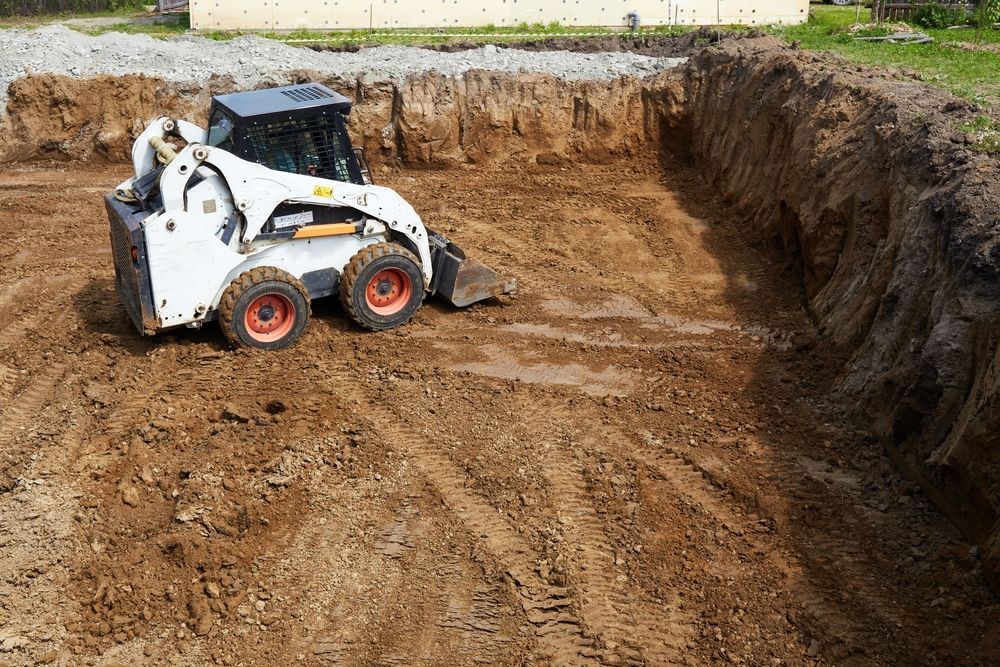
Proper preparation begins with removing organic material that decomposes over time, creating voids beneath concrete or structural footings. Topsoil and root systems must be stripped away before fill material or compacted base layers are introduced, since organic decomposition causes uneven settling that leads to cracked slabs and misaligned door frames. Professional excavation equipment removes these layers efficiently and grades the lot to slopes that direct rainwater and snowmelt toward drainage paths rather than building perimeters.
Once grading is complete, your property shows defined drainage patterns, level building pads ready for concrete forming, and compacted surfaces that remain stable under load. You notice water flowing away from foundation zones during rain events rather than pooling near walls, and construction crews can position forms and equipment on solid ground instead of dealing with soft spots or uneven terrain. These conditions remain consistent through freeze-thaw cycles common to Indiana winters, since proper compaction prevents frost heave that displaces poorly prepared soil.
Site preparation for homes, garages, commercial buildings, and outdoor structures requires different equipment depending on project scale—compact machinery works efficiently on residential lots with limited access, while larger grading equipment handles commercial developments or rural properties with extensive clearing needs. The preparation phase also establishes utility trenching routes and access points for water lines, electrical conduits, and drainage systems that must be installed before final grading and paving occur.
Questions Before Starting Your Project
Property owners throughout DeKalb, Steuben, and LaGrange counties often ask about preparation timelines, equipment requirements, and how terrain affects the scope of groundwork needed before construction begins.
What does site preparation include for a residential building lot?
Preparation involves clearing vegetation and debris, removing unstable topsoil, grading the surface to establish drainage slopes away from building zones, and compacting base layers to support concrete foundations or structural loads without settling.
How does soil type in northeast Indiana affect preparation work?
Clay-heavy soils common in this region require specific compaction methods and moisture management during grading, since clay expands when wet and contracts when dry, creating movement that destabilizes poorly prepared surfaces.
When should grading happen relative to other construction phases?
Grading occurs after clearing and rough excavation but before utility trenching and foundation forming, allowing drainage patterns to be established while the site remains accessible to heavy equipment.
What equipment is used for grading and leveling?
Professional preparation uses excavators for bulk material removal, bulldozers for fine grading and slope adjustments, and compaction equipment to stabilize base layers, with machinery size matched to lot access and project scale.
How does proper preparation reduce future drainage problems?
Correctly graded surfaces direct water away from structures and toward designated drainage paths, preventing pooling that saturates foundation perimeters, erodes landscaping, or creates ice hazards during winter months.
Millennium Concrete & Excavating works with builders, property owners, and contractors throughout the region to complete groundwork that supports stable, long-lasting construction. Request a quote to review your property's specific preparation requirements and establish a timeline that coordinates with your construction schedule.